
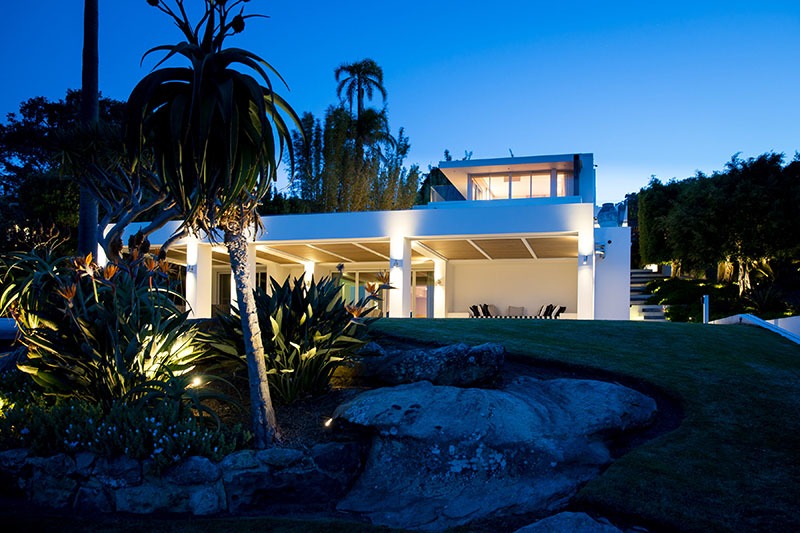
Lighting a Paddington terrace isn’t like lighting a sprawling suburban home. You’re dealing with some specific constraints. First, there’s the width, as most terraces sit on allotments that are only four to six metres wide. That means every light you install has a good chance of annoying your neighbours if it’s not carefully aimed. Light spilling into someone else’s bedroom window is a fast track to a council complaint.
Then there’s the heritage overlay. Woollahra Council (or City of Sydney, depending on your street) takes the Heritage Conservation Area status seriously. Any exterior changes need to be “sympathetic to existing character,” which basically means your lighting fixtures can’t look like they’ve been teleported in from a Tesla showroom. During the day, they need to blend in or enhance the historic aesthetic, not stick out like a sore thumb.
And finally, there’s Sydney’s coastal climate. Salt air from the harbour and ocean doesn’t play nice with cheap metals. Within a year or two, lower-quality fixtures start corroding, leaving you with rust stains on that beautiful sandstone you’ve just restored.
Choosing the right materials
If you focus entirely on the light output and forget that the fixture itself becomes part of the architecture, especially on a heritage home where details matter, you’ll have a sub-par outcome.For Paddington terraces, you want solid brass, copper, or marine-grade 316 stainless steel. Not powder-coated aluminium that’ll start peeling after one wet winter. Not standard stainless that’ll develop tea staining in the salt air.
Here’s why brass and copper are brilliant for heritage frontages: they develop a natural patina over time. That protective oxide layer actually seals the metal underneath and prevents further degradation. More importantly, as they age from shiny metallic to weathered bronze or green, they start to blend into the historical fabric of the building. It’s like they’ve always been there. Bondilights specialises in exactly these materials, as their Piccolo range in solid brass and copper is designed specifically for high-end heritage applications.
For more modern rear extensions (where most Paddington renovations go full contemporary), 316 stainless steel gives you those clean lines without the corrosion issues. The molybdenum in marine-grade steel provides serious protection against the pitting that saltwater causes.
Getting the light quality right
Colour temperature is measured in Kelvin, and it makes a massive difference to how your sandstone and brickwork actually look at night.
Warm white (2700K-3000K) is your friend for heritage materials. It mimics the glow of old incandescent bulbs and candlelight, which, coincidentally, were what these buildings were originally designed to be lit by. When you hit Sydney sandstone with warm white light, it emphasises the reds and ambers in the stone, making it look rich and inviting. It creates that sense of warmth and prestige that makes people stop and admire your place as they walk past.
Cool white (4000K and above), on the other hand, can make the same sandstone look flat, grey, and sterile. Save that crisp white light for functional areas like garages or back gates, where you need visibility over ambience.
The smart play is to layer these temperatures strategically. Warm white around your front entrance and entertaining areas; cool white reserved for purely functional zones. Think of it like the lighting equivalent of having different “rooms” in your outdoor space.
Three clever techniques to consider
Wall grazing for texture
If you’ve got exposed sandstone or original brickwork, wall grazing is your secret weapon. You position fixtures close to the wall (within six to twelve inches) and aim them upward at a narrow angle. This creates dramatic shadows that show off every bit of texture, like the rugged edges of stone blocks, the individual brick courses, and the jagged character that makes heritage masonry so appealing.
Recessed step lighting for safety
Those sandstone entry stairs are beautiful, but they’re also a genuine trip hazard after dark. Recessed step lights solve this while keeping the aesthetic clean. The Piccolo 20, for instance, only needs a 20mm cut-out, making it one of the least invasive fixtures available. With the right “hat” or “eyelid” attachment, the light goes down onto the stair tread, not up into your eyes or across into your neighbour’s windows.
Accent lighting for ironwork
That gorgeous cast-iron lacework deserves its moment. During the day, sunlight creates complex shadow patterns across the facade. At night, thoughtful accent lighting can recreate that depth. The key is precision. A light source too far away gives you diffuse shadows that lose detail; too close creates distracting hot spots. Narrow beam angles (15-30 degrees) work beautifully, creating focused columns of light that highlight specific architectural elements without washing out the whole front of the building. Bondilights’ directional LED fixtures are engineered for exactly this kind of theatrical effect.
Keeping outdoor lighting installation simple
150-year-old buildings weren’t built with modern electrical systems in mind. Traditional installation often means chasing cables into brickwork or drilling into sandstone, which can compromise structural integrity and destroy heritage fabric.
Bondilights’ “Plug and Play” low-voltage system minimises invasive work, uses pre-configured waterproof connectors, and makes it possible to add or change fixtures without major electrical surgery. For heritage properties, this approach aligns with council definitions of conservation as “maintenance and preservation” rather than alteration.
Professional installers also know to fix into mortar joints rather than sandstone blocks themselves. This prevents frost-shattering (where water gets in, freezes, and cracks the stone) and keeps the masonry intact for another century or two.
Let Bondilights help today
Bondilights’ service model is designed specifically for Sydney’s heritage market. Our complimentary overnight demonstration service sets up temporary fixtures and lets you see exactly how different beam angles and colour temperatures work with your specific sandstone and ironwork before you commit. You get to live with it overnight and make informed decisions.
Being Australian-owned and manufactured also means customisation. Every Paddington terrace is slightly different (plinth height, passage width, stair configuration). Off-the-shelf solutions rarely fit properly. The Bondilights team can adjust pole heights, pivot arm lengths, and mount configurations to suit your exact architecture. Let’s chat about improving your lighting today.